

The situation
Sunfield EPC runs commercial rooftop across Vidarbha — typically 150 kW to 900 kW, four to six live enquiries at a time. Every enquiry produced a feasibility study, and every study was built three times: once by the surveyor in a spreadsheet, once by the designer in simulation software, and once by the proposals desk in a slide deck for the customer.
Nothing about that is unusual. What made it expensive was that the three versions disagreed often enough that the proposals desk had learned to re-derive the numbers rather than trust them.
What changed
- 1One survey record, captured on siteThe surveyor's measurements, roof photographs and obstruction notes became the single record everything downstream reads from.
- 2The design reads the survey, it does not retype itTilt, azimuth, parapet heights and usable area flow into the layout instead of being re-entered from a PDF.
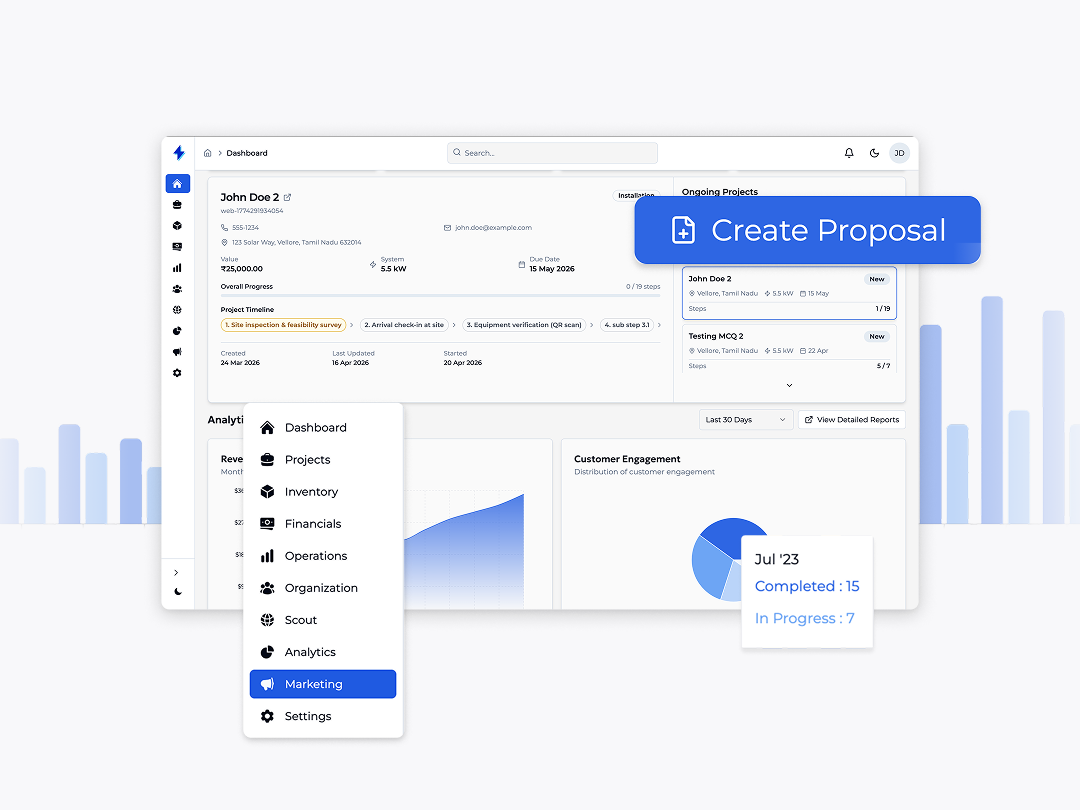
- 3The customer document is generated, not assembledThe proposal is a view of the same record, so a revised survey revises the proposal rather than starting a new one.
The win was not speed, it was that we stopped arguing about whose number was right. There is one number now.
Managing partner, Sunfield EPC
Where it landed
Six months in, feasibility goes out the same working day as the site visit. The proposals desk shrank from three people to one, and the two who moved went to pre-sales — which is where the enquiries were being lost.
Aditya leads deployment research at ReDesk, working with EPCs and installers to find where real projects lose time.